Planting Seeds for South Dakota’s Future By Rep. Dusty Johnson August 21, 2026
BIG Update
Dakotafest celebrates the best of South Dakota agriculture. Every year, this event brings people together to learn about the techniques and technology that our producers use, and yes, the delicious food our producers work so hard to provide. It’s especially encouraging to see the next generation of South Dakota agriculture inspired by the equipment and conversations at Dakotafest.
I joined in on the fun to provide an update from Congress, including the status of the Farm Bill, the path toward year-round E15, and the producer-first policies we’ve already put into law. It’s important to hear directly from those working in the fields about the challenges they face and how policymakers can support their work. I also saw firsthand some of the technologies that are supporting producers today.
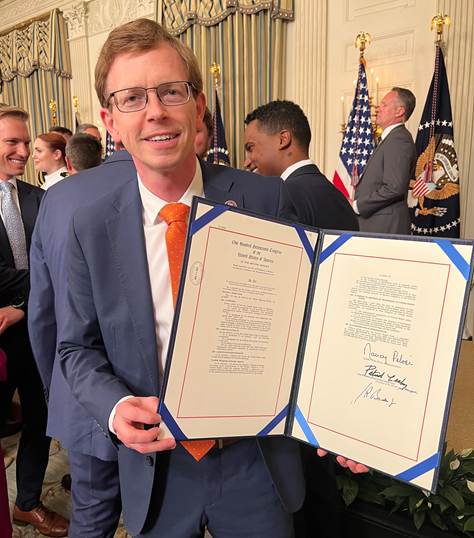
Johnson speaks with producers at Dakotafest in Mitchell
BIG Idea
Rural economic growth is powered by innovators, entrepreneurs, and builders. I joined the NorthWestern Energy Summit in Sioux Falls to discuss the importance of our shared commitment to growing South Dakota’s economy and investing in its future. The United States must continue to do big things, and South Dakota can play a leading role in our nation’s future. By encouraging investment and opportunity, we can strengthen South Dakota’s rural communities.
Johnson speaks at the NorthWestern Energy Summit in Sioux Falls
BIG News
The Rural Health Transformation Program, established through the Working Families Tax Cuts, set aside $50 billion to strengthen rural health care across America. This week, the administration announced South Dakota will receive $90 million to modernize health care technology, expand access to care, support tribal health options, and strengthen the rural health care workforce. I supported this program in Congress, and I’m glad to see these investments reach South Dakota’s rural communities to ensure families can access quality care. This investment will have a significant impact on the future of health care in our state.
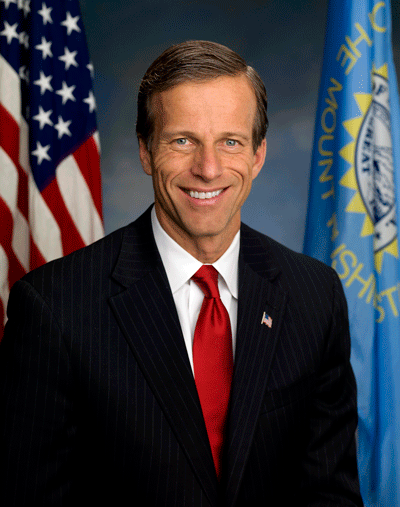
A Brighter Future for the Next Generation By Sen. John Thune
It’s back-to-school time in South Dakota. Hallways and classrooms across our state are abuzz with students, from high school seniors thinking about what comes next to kindergartners just getting started. I’m wishing all of South Dakota’s students and their teachers the best as they start another school year.
The importance of a good education and its power to open new worlds and opportunities is something my parents – both public school educators – instilled in us Thune kids when we were growing up. And I’m proud that Republicans in Congress passed the Working Families Tax Cuts last year, which included a number of provisions designed to set the next generation up for success. Whether your son or daughter is just learning their ABCs or working on plans for after graduation, there’s something in this landmark legislation to help them.
For decades, the 529 education savings plan has been a powerful tool for parents to save for their children’s education. At first, a 529 account could only be used for college, but in 2017 Republicans expanded them to cover K-12 expenses too. Last year in the Working Families Tax Cuts, we expanded 529s again, allowing these savings to be used for homeschooling materials, tutoring, vocational training, and continuing education. On top of that, we doubled the withdrawal limit to $20,000 per year, giving even greater flexibility to parents.
Parents also now have another option for investing in their kids’ futures: Trump Accounts. These new tax-advantaged investment accounts are designed to give parents another tool to invest in their children’s futures beyond their education. The money can go toward education expenses, but it can also be used to buy a first home, start a business, or be converted into a retirement account in adulthood. Parents can opt-in to receive a $1,000 initial deposit from the federal government for kids born between 2025 and 2028, and several companies have offered to make contributions to the Trump Accounts of their employees’ children.
The Working Families Tax Cuts also created the new Workforce Pell grant program, which will provide financial support for shorter-term job training programs for in-demand jobs. This promising new program is available to those who are just starting their career as well as mid-career professionals or people looking to change careers. Workforce Pell provides hardworking people with the flexibility they need to pursue the opportunities that open the way to a brighter future.
I’m always impressed with South Dakota’s future leaders, whether it’s when I’m visiting a school, seeing them compete on the playing field, or talking with them in South Dakota or in Washington. Cultivating a brighter future for them is an important responsibility for me as a senator for our state. I’m proud of the work we did in the Working Families Tax Cuts to create more pathways to success, and I’ll continue working to strengthen the American Dream for the next generation.
Revitalizing Small Towns By: Gov. Larry Rhoden August 21, 2026
There’s something about a small town. You walk into a local restaurant, and they greet you by name. You know exactly what you’re going to order without opening the menu. You make small talk with the folks at the next table over about the kids or about the pastor’s sermon, and it’s easy conversation because you’ve known them for years. That’s the way of life that I grew up with.
But in recent years, our small towns have gotten smaller – too small in many cases. Those local restaurants and shops have been dying out. And in some places, the local hospitals and schools have followed suit. This seemed like a problem with no end in sight – until the COVID pandemic brought a surge of new folks to South Dakota. For the first time in decades, many of our small towns actually grew!
And now, the Rhoden-Venhuizen Administration is seizing on that momentum to make crucial investments in small town South Dakota.
It began with a couple key initiatives during the Noem-Rhoden Administration. South Dakota came out of COVID stronger than any other state because we were the only state that never shut down, and our strong economy led to record-breaking tax revenues. Well, we didn’t spend that money frivolously. We invested it wisely.
Over the last several years, we’ve invested nearly $400 million to wire every corner of South Dakota with high-speed broadband. Governor Janklow is famous for wiring our schools sooner than pretty much anywhere in the country – and we’ve gone far beyond that. Now, you can get high speed internet anywhere. And in the 21st Century economy, that means that anyone can run a small business out of their living room, whether they’re in Sioux Falls or my hometown of Union Center. Too often, folks leave small towns because of loss of economic opportunity. That doesn’t have to be the case anymore.
And the single biggest investment of the Noem-Rhoden Administration was in local water projects. We invested over $900 million to modernize South Dakota’s water systems, and much of that investment went to small towns who desperately needed a revitalization. I’m proud to have been part of that effort.
My administration is carrying this revitalization of our rural communities forward. Here’s one thing I’m especially excited about: our Rural Health Transformation initiative.
We are building a stronger, more connected health care system for South Dakotans. In just the last few days, we announced an additional $90 million in grants to modernize technology in rural health care. These investments will modernize our health care and make sure more of our citizens can access the very best care while keeping their data secure.
This opportunity goes far beyond just our rural hospitals. We’re investing in dentists, mental health, and bringing health care professionals to rural communities. We’re giving these rural health systems access to opportunities like cybersecurity. And this isn’t a one-time flash in the pan – we received $189 million from the Trump Administration this year, and we’ll continue to see nearly a billion dollars over a five-year period.
The Rural Health Transformation initiative lays the foundation for healthier communities over the long term. More importantly, it helps revitalize our rural way of life. If folks can get the care they need in the small town they grew up in, why leave?
I will continue working to revitalize rural South Dakota. My team is already looking ahead to next legislative session and scoping out opportunities. I can’t wait to keep working hard for you!
Nate Franzen serves as the President of the Ag Banking Division at First Dakota Bank in Yankton, South Dakota and is the Chair of SD Bankers Association Board.
South Dakota’s Farm Economy Can’t Afford a Crypto Shortcut by Nathan Franzén, SD Bankers Association
South Dakota agriculture operates months ahead of its income.
Long before a crop is harvested or cattle are sold, producers are paying for seed, fertilizer, fuel, feed, repairs, veterinary care, land rent and equipment. The bills arrive on schedule. Farm income does not.
That is why the operating line from a local bank matter so much. It allows a producer to put a crop in the ground, keep livestock fed and make it through the months between spending money and earning it back.
That relationship becomes even more important when the year does not go according to plan. Drought can reduce pasture and hay. A spring storm can damage crops or livestock. Input costs can jump without warning, and commodity prices can move in the wrong direction after most of the money has already been spent.
When that happens, our local bankers who know the operation and understand agriculture can make all the difference.
That is why a debate over cryptocurrency legislation in Washington should matter to farmers and ranchers across South Dakota.
The CLARITY Act is intended to establish clearer rules for digital assets. That is a reasonable goal. But the current legislation leaves a gap that could affect the deposits held by community banks in rural states like South Dakota.
Under the proposed approach, crypto platforms and related companies could offer interest-like payments to customers who keep stablecoins on their platforms. In practical terms, those companies would be competing with bank deposits without following the same rules or carrying the same responsibility to lend money back into local communities.
That may sound like a technical financial-policy dispute. It is not.
Deposits are the foundation of community-bank lending. The money deposited by families and businesses in a South Dakota town is put to work through operating loans, equipment financing, livestock loans, mortgages and credit for local businesses.
When those deposits leave the community bank, the bank has less affordable funding available to lend locally. It may have to replace those deposits with more expensive money, tighten lending standards, or charge borrowers more.
For a family farm, a beginning producer, or a small rural business, that can be the difference between moving forward and putting an investment off for another year.
A higher rate on an operating line means less money for seed, feed, machinery or employees. Tighter terms can make it harder for a young producer to buy land or for an established operation to recover from a difficult season. Less flexibility can be especially damaging in agriculture, where weather and markets rarely cooperate with a fixed repayment schedule.
The effects would not stop at the farm gate. Agriculture supports equipment dealers, cooperatives, feed stores, livestock markets, processors, truckers and other businesses throughout South Dakota. When farm credit becomes tighter or more expensive, the entire rural economy feels it.
None of this requires Congress to choose between agriculture and innovation. South Dakota producers use sophisticated technology every day. Rural America is not afraid of new ideas.
But innovation should compete on fair terms. A crypto platform should not be allowed to function like a bank account when attracting customers and then avoid the responsibilities that come with being a bank.
The solution is narrow and straightforward. Congress should close the carve-out and make clear that issuers, exchanges, affiliates and other third parties cannot pay people simply for holding stablecoins. Lawmakers can support legitimate digital payments without creating an incentive for deposits to leave the institutions that finance farms and rural communities.
Senator Mike Rounds and Senator John Thune are in unique positions to help make that happen.
As SD Bankers, we are grateful for the continued support both Senators have given to real problems faced by our Community Banks and SD Ag producers.
As the Senate considers the CLARITY Act, this language needs to be fixed before the bill advances. South Dakota’s farmers, ranchers, and rural businesses should not bear higher borrowing costs so large crypto companies, with tons of money, can unfairly expand a profitable business model.
Agriculture already comes with enough uncertainty. Washington should not add another risk by weakening the local lending system producers depend on.
South Dakota’s farm economy runs on credit, and that credit starts with deposits kept close to home.
I recently caught this article from back in late June that I had missed during the frenzy of the extended GOP Primary for Governor where “pretending to be Indy” US Senate Candidate Brian Bengs made a statement that’s somewhat loaded:
Bengs describes himself as a lifelong independent, outside of his brief stint as a Democrat to run for Senate in 2022. On that experience, Bengs in unequivocal: “I would never run as a Democrat again. That was my takeaway. The whole experience from the ‘22 race was soul sucking and exhausting.”
In fact, it seems like there’s nothing more that Brian Bengs wanted than to be the Democrat’s Candidate without being saddled with the label:
“A lifelong independent, he said he got turned down by the party this time when he sought to run with its organizational support but without the label. Still, he insists he can win without the party’s formal backing.
“One key lesson from his 2022 campaign, he says, was how hard it was to break through with the Democratic Party label.
While Bengs might describe himself as an independent, there’s a lot that doesn’t ring true about that statement. While claiming to be Indy, Bengs has relied heavily on the Democrat Party’s Campaign Framework. I had written about it briefly in July of 2025, and it speaks volumes of why State Democrat Party Leadership up and abandoned their candidate Julian Beaudion. Bengs has been running using Democrat Party resources all along. From 2025:
Even more interesting is the fact there is a Democrat in the race, Julian Beaudion, yet Bengs is raising money using Democrat fundraising platform ActBlue according to the report. I can’t imagine state dems would be happy about that with Bengs sniping cash out from under him. It also looks like he’s using Dem software firm NGP VAN Inc, who bills itself as the “leading technology provider to democratic and progressive political campaigns and organizations.” …
So… Bengs is supposed to be running as an Independent? Yet uses Democrat candidate infrastructure and organizations to rase money and organize?
Bengs has also tapped into some of the State Democrat Party’s higher profile personnel in support of his campaign. In his latest report, former Democrat Minnehaha County Commissioner Jeff Barth is a major donor at $500. Long-time Dem Party activist Tom Dean is in for $2650. Former Democrat Gubernatorial candidate Susan Wismer ponied up another $500, bringing her to date total to $1500 for Brian Bengs.
What is going on here? Color me doubtful that this is about altruism, as much as a play for the Democrats to be competitive in the US Senate race without actually referring to themselves as Democrats.
But it’s not just the framework for his campaign, or the Democrat Party activists who are supporting this so called Indy while winking at everyone. Look at Bengs’ position on the issues:
He calls himself a fiscal conservative (he wants to balance the budget through a mix of cuts and tax increases on the wealthy) and social liberal (in favor of abortion rights).
It’s going back in history at this point, but the value added tax or VAT was a favorite proposal of former Democrat Senator Tom Daschle’s to pay for universal health care among other things. Again, an old Democrat proposal on raising taxes as part of the Bengs’ talking points.
Sorry, but I’m not believing at this point that Brian Bengs is anything other than a man of ambition who knows he can’t win by admitting he’s running as a liberal Democrat.
My father, career law enforcement in the FBI, had a phrase that he would throw out from time to time. “If it walks like a duck, and quacks like a duck, It’s a duck.”
I think we can equally apply that truism to Brian Bengs as well. In the campaign, if he runs like a Democrat, and quacks like a Democrat – I think we can count him on him being a Democrat.
An unsuccessful primary candidate for District 7 House is back in the news. Former Republican legislative candidate Jeff Struwe is back in the news as he was apparently recommended to serve on the Brookings Human Rights Commission by the Brookings County Commission.
Except people’s memories are longer than Jeff and commissioners might hope, as his reputation has apparently preceded him:
Local Democrats have taken to facebook to oppose the appointment due to the claim that “Jeff has publicly advanced descrimination (sic) and falsehoods about minorities.”
Local Democrats certainly have their own reasons for not wanting Struwe in the office. But really, do we want to appoint people to office if they believe it’s their mission in life to force government to be the gatekeeper of what people think, what they can read, and how they should parent? Not just no, but Hell, No. We can do just fine without the zealots using government as a weapon, thank you very much. Jeff’s advocacy for more government is about as welcome as the dozen or so flock cameras around town tracking where we drive. As in, not at all.
We need a less intrusive government. Not a nanny state.
While the post might be pulled down already, before that, it didn’t take readers long to screenshot this and to send it to me.
D17 Democrat House candidate Leslie Gerrish apparently took to facebook today to declare to followers she’s a liberal who wants to raise taxes. And if a person who is a homeowner does get tax relief under Governor Rhoden’s property tax program, she thinks people should make huge donations to charity. Because property tax relief equals ill-gotten gains or something?
You know, sometimes the postcards just write themselves. A liberal who wants to raise your taxes. Usually a campaign has to try to convince voters that’s the case and hope the recipient of the campaign material agrees with the conclusion. As opposed to the candidate coming right out and saying it in print.
Which might be why Gerrish took her facebook post down within a couple hours of making the case against voting for her.
Rounds Introduces RANCH Act to Help Rebuild America’s Cattle Herd
Voluntary working lands program would restore 20 million acres of grazing land in the United States
WASHINGTON – U.S. Senators Mike Rounds (R-S.D.) and Amy Klobuchar (D-Minn.), ranking member of the Senate Agriculture Committee, today introduced the Rebuilding America’s National Cow Herd (RANCH) Act. This legislation would create a new voluntary grazing land restoration program that would open up to 20 million new acres for grazing. At full enrollment of 20 million acres, the program established by the RANCH Act would provide sufficient grazing land to support an estimated two to four million additional beef cows.
“Anyone who has spent time around cattle understands one simple truth: no grass means no cattle,” said Rounds. “With ranchers facing drought, high input costs and a shortage of grazing land, America’s beef cow herd is at its smallest size in over 70 years. The RANCH Act would create a voluntary Ranchland Program that helps producers restore eligible marginal cropland into grasslands for grazing. Producers can use their land in a way that makes the most sense for each individual operation, giving those who know their land best the tools needed to succeed.”
“With the U.S. cattle herd at its smallest size in over 70 years, many farmers and ranchers need new opportunities to stay afloat,” said Klobuchar. “The bipartisan RANCH Act will help farmers looking to start a cow-calf herd or expand their existing herd while also providing wildlife habitat on the land. In the long-term, this plan can rebuild the domestic cattle herd and help drive down beef costs.”
The RANCH Act:
Strengthens American food security by expanding the domestic beef supply and reducing reliance on imported beef.
Puts American ranchers first, expanding the grazing land base needed to rebuild the national cowherd and meet growing consumer demand.
Expands domestic demand for American-grown grain and forage, giving U.S. farmers a stronger, more reliable market as the cattle herd grows.
Supports commodity prices for row crop producers by modestly tightening grain supply through a reduction in planted acres.
Makes U.S. farmers and ranchers more competitive in the global marketplace while building a stronger domestic agricultural base.
Enhances water quality, soil health and wildlife habitat through established perennial cover and managed grazing.
Reinvigorates rural communities through the economic benefits of increased livestock production, grain demand and wildlife populations.
Lowers the barrier to entry for beginning ranchers through targeted cost-share and signing incentive payments, bringing the next generation onto the land.
The RANCH Act is supported by the South Dakota Cattlemen’s Association, Society for Range Management, Pheasants Forever, the World Wildlife Fund, the National Audubon Society, Delta Waterfowl, Ducks Unlimited, the National Wildlife Federation and the Minnesota State Cattlemen’s Association.
“South Dakota cattle producers understand that well-managed grazing is not only compatible with conservation, it’s one of our most effective conservation tools,” said Craig Bieber, President of the South Dakota Cattlemen’s Association and owner and operator of Bieber Red Angus Ranch near Leola. “Expanding access to grass, keeping working lands in production, and creating opportunities to responsibly grow the nation’s cattle herd can strengthen ranch families, rural communities, and the health of our natural resources. The South Dakota Cattlemen’s Association appreciates Senator Rounds’ efforts to recognize cattle as an essential part of healthy, productive landscapes.”
“I’m encouraged to see Congress listening to the voices of farmers and ranchers who work in grasslands every day. Strong grass-based agriculture depends on healthy, productive grasslands, and investments in voluntary grazing and conservation practices help keep ranching businesses profitable for the long term,” says Dan Rasmussen, who, with his wife, Dawn, stewards 33 Ranch near Belvidere, South Dakota. “Through our work with Audubon and other partners, we’ve seen firsthand that when we manage grasslands well, our cattle benefit, wildlife thrives, and water quality improves. That’s a win for ranchers, rural communities, and everyone who depends on these working lands.”
“The RANCH Act is a smart investment in America’s working lands at a critical time for farmers, ranchers, and rural communities,” said Andrew Schmidt, Director of Government Affairs for Pheasants Forever and Quail Forever. “Giving producers the tools to convert marginal cropland to grazing land can help ranchers grow their operations, bring more grass back to the landscape, and increase the habitat that pheasants, quail, and other wildlife depend on. Pheasants Forever and Quail Forever thank Senators Rounds and Klobuchar for their leadership on this important legislation.”
“The RANCH Act meets a critical need for America’s ranchers and grasslands, particularly in the Great Plains,” said Alexis Bonogofsky, Vice President of the Great Plains Program at the World Wildlife Fund. “It would create a dedicated program to restore grasslands for grazing and enable effective grazing management plans, which are essential to the productivity of both ranchers and grassland ecosystems. While the scale of marginal lands that need to be restored far exceeds the 20 million acres this program would support, this is a significant and welcome step forward.”
“The RANCH ACT is the sort of legislation and idea that we have long worked on and hoped for to find new ways to incentivize creation of working forage to support ranchers, cow calf operations and cover for nesting ducks and other species,” said John L. Devney, Chief Policy Officer at Delta Waterfowl. “We sincerely appreciate Senator Rounds and Senator Klobuchar for advancing this important idea.”
“Healthy grazing lands are essential to a healthy landscape,” said Ryan Taylor, Director of Public Policy at Ducks Unlimited. “The RANCH Act recognizes the conservation value of these working lands while helping address the need for additional livestock grazing. This legislation helps ranchers restore marginal cropland to perennial cover and managed grazing. Ducks Unlimited supports voluntary, rancher-driven solutions that improve habitat, soil health, and water quality while keeping ranchers on the land for generations to come.”
“The Minnesota State Cattlemen’s Association is grateful for Senator Amy Klobuchar’s and Senator Mike Rounds’ support of the RANCH Act, which would establish a new voluntary grazing land restoration program to support and enhance grazing lands across the country,” said Jake Thompson, President of the Minnesota State Cattlemen’s Association. “Grazing is an incredible tool for land management, and it is great to see a program that offers cost-share and signing incentive payments to offset financial costs for the producers.”
Click HERE for a summary of the bill. Click HERE for full bill text.
PIERRE, S.D. – Today, Governor Larry Rhoden signed Executive Order 2026-10 to expand assistance to South Dakotans during this drought emergency. The order expands South Dakota Wildland Fire’s assistance and resources to help rural fire departments outside the Black Hills Forest Fire Protection District. In addition, the Governor extended the provisions of EO 2026-08 on flexibility for hay hauling.
“As a volunteer firefighter, I understand that every second counts when attacking a fire. And as a lifelong rancher, I recognize the difficulty feeding livestock during this ongoing drought,” said Governor Larry Rhoden. “Supplementing local resources with approved state assistance will improve response time, saving lives and property.”
Over 90% percent of South Dakota is suffering from abnormally dry or moderate to extreme drought conditions.
Governor Rhoden previously signed EO 2025-03, which allows for the deployment of firefighting airplanes and helicopters to assist with fires within the Black Hills Forest Fire Protection District. This order extends those resources to any fire in the state if needed to protect lives and property.
This year, the Governor has verbally declared an emergency to exist for the “79 Fire” in April and the “Bear Butte Fire” in August because those fires were outside the Black Hills Forest Fire Protection District. This order approves similar future deployments to assist local fire departments immediately.
As drought conditions continue to negatively impact feed availability for livestock across South Dakota, this order also extended the expiration date so the provisions of EO 2026-08, which increase access to hay for farmers and ranchers, lasts through the end of the season. Hay hauling can continue for two hours before sunrise and two hours after sunset from now until November 15, 2026.
These haulers must be properly equipped with warning lights, and they cannot run overweight. Permits are available to allow oversize movement of hay up to 12 feet wide and to extend the time allowed for movement of vehicles from 4 a.m. to 10 p.m., provided the load has reflectorized or lighted oversize load signs on the front and back of the vehicle(s). The permits are free and available by contacting the South Dakota Highway Patrol Permitting Office at 605-698-3925.
Earlier this spring, Governor Rhoden activated the state Drought Task Force to monitor drought conditions across South Dakota and be available to quickly respond to emergencies like this. The Drought Task Force endorsed these waivers at their meeting today when presented by the Governor’s Office and the Department of Agricultural and Natural Resources.